

Immigration Consultants..
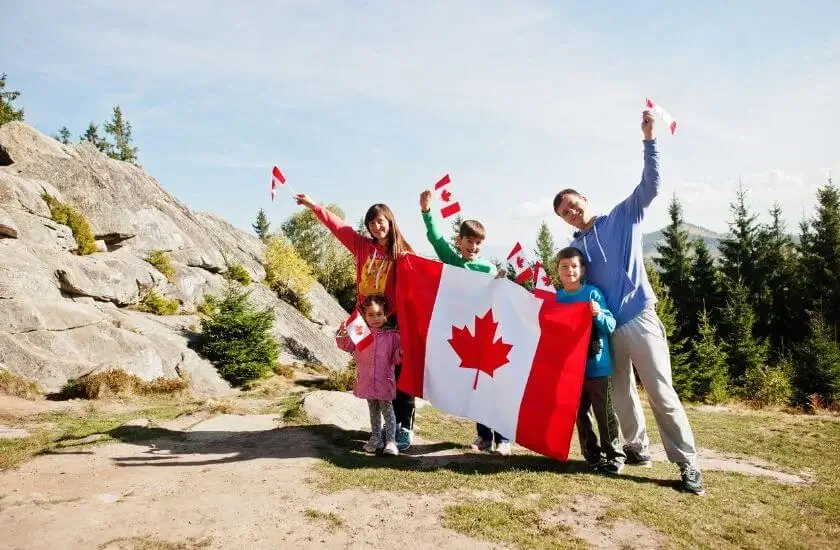
Family sponsorship lets a Canadian citizen or permanent resident bring a spouse, partner or dependent child to Canada as a permanent resident. You apply as the sponsor, and your family member applies for permanent residence at the same time. IRCC decides both parts of the application.
White Swan Immigration Consultants is a licensed RCIC firm in Richmond, British Columbia. We help sponsors choose the right category, build relationship evidence that holds together, and avoid the mistakes that cause delays. We work with sponsors in Canada and with families in Pakistan.
| Relationship | Main conditions | Undertaking length |
| Spouse | Legally married, and the marriage is genuine and valid where it took place and under Canadian law | 3 years |
| Common-law partner | Lived together continuously in a conjugal relationship for at least 12 months | 3 years |
| Conjugal partner | At least a year together, but living together or marrying isn’t possible for reasons outside your control, such as legal or immigration barriers | 3 years |
| Dependent child | Under 22 and not married or in a common-law relationship, with limited exceptions for children who depend on you because of a physical or mental condition | 10 years or until age 25, if the child is under 22 |
| Parent or grandparent | New intake is paused. See the Parents and Grandparents section below | 20 years |
Every sponsor has to meet the same core conditions before IRCC looks at the relationship.
For a spouse, common-law partner, conjugal partner or dependent child, there is generally no minimum income requirement. The narrow exception is a dependent child who has a child of their own. The income test based on Statistics Canada’s Low Income Cut-Off plus 30% applies to parent and grandparent sponsorship, and the Super Visa has its own income test.
Outland sponsorship is for a partner who lives outside Canada. The application is processed for a visa at a Canadian visa office abroad. It is the usual route for families in Pakistan.
Inland sponsorship is for a spouse or common-law partner who already lives in Canada with valid status. Conjugal partners can’t use it. Inland applicants may be able to apply for an open work permit while they wait, subject to IRCC’s current policy.
Many couples can use either route. The better one depends on your partner’s status, travel plans, how long they can stay, and whether they need to work. We compare both before you file.
Government fees
IRCC raised most permanent residence fees on April 30, 2026. As of that update, sponsoring a spouse or partner cost $1,260 in government fees including the Right of Permanent Residence Fee, with $180 for each dependent child included on the application. Biometrics, medical exams, police certificates, translations and professional fees are separate. Confirm the amounts on IRCC’s fee list before you pay.
How long it takes
Processing times change monthly and depend on whether you apply inland or outland and on the country involved. Use IRCC’s processing-times tool for the current estimate. The part you control is submitting a complete, consistent application the first time.
The undertaking
You commit to supporting your family member for three years from the day they become a permanent resident if they’re a spouse or partner. For a dependent child under 22, the period is 10 years or until the child turns 25, whichever comes first. The undertaking stays in force even if the relationship ends or your finances change, and you may have to repay social assistance your family member receives.
On July 15, 2026, IRCC paused intake of new Parents and Grandparents Program applications. IRCC will not receive new interest-to-sponsor forms or send invitations until further notice, though it continues to process existing applications and plans to approve up to 15,000 people for permanent residence through the program in 2026.
In the meantime, parents and grandparents can visit with a Super Visa, which allows stays of up to five years at a time with multiple entries for up to ten years. IRCC recently changed the Super Visa income and health insurance requirements. We update this page if the Parents and Grandparents Program reopens.
We can’t guarantee approval. IRCC makes the decision. Your file is handled by a licensed RCIC: [RCIC full name, CICC licence number, link to CICC register profile].
Answer yes to most of these and an assessment is worth your time:
If your family member may also qualify for a skilled route, we can compare it with Express Entry or a provincial nominee program.
Canadian citizens and permanent residents aged 18 or older can sponsor a spouse, common-law partner, conjugal partner or dependent child. Parents and grandparents can also be sponsored, but IRCC paused new Parents and Grandparents Program intake on July 15, 2026. Other relatives qualify only in narrow cases.
Generally no. IRCC doesn’t set a minimum income for sponsoring a spouse, partner or dependent child, though you still sign an undertaking and can’t be receiving social assistance for reasons other than disability. The income test based on LICO plus 30% applies to parent and grandparent sponsorship, not to spouses.
Outland means your partner lives outside Canada and applies through a visa office. Inland means your spouse or common-law partner already lives in Canada with valid status. Inland isn’t available to conjugal partners. Processing times and work-permit options differ, so we compare both before you apply.
Not right now. IRCC paused new Parents and Grandparents Program intake on July 15, 2026 and won’t accept new interest-to-sponsor forms or send invitations until further notice. Existing applications are still being processed. The Super Visa lets parents and grandparents visit for up to five years at a time.
Tell us who you’d like to sponsor, where they live and what documents you already have. We’ll come back with the route that fits and what to prepare.
Book an initial consultation | Start your assessment